
Canadian Intelligence
Foreign powers & terrorist groups have completely subverted Canada's intelligence services

“There was a general understanding that Canada, in the Five Eyes community, was a — let’s call it a net importer of intelligence … And the RCMP specifically was a much greater consumer (of information) and produced very little to be provided back into the Five Eyes … And so, one of my jobs was to try and rectify that over time.”
-former Royal Canadian Mounted Police intelligence official and convicted spy Cameron Ortis
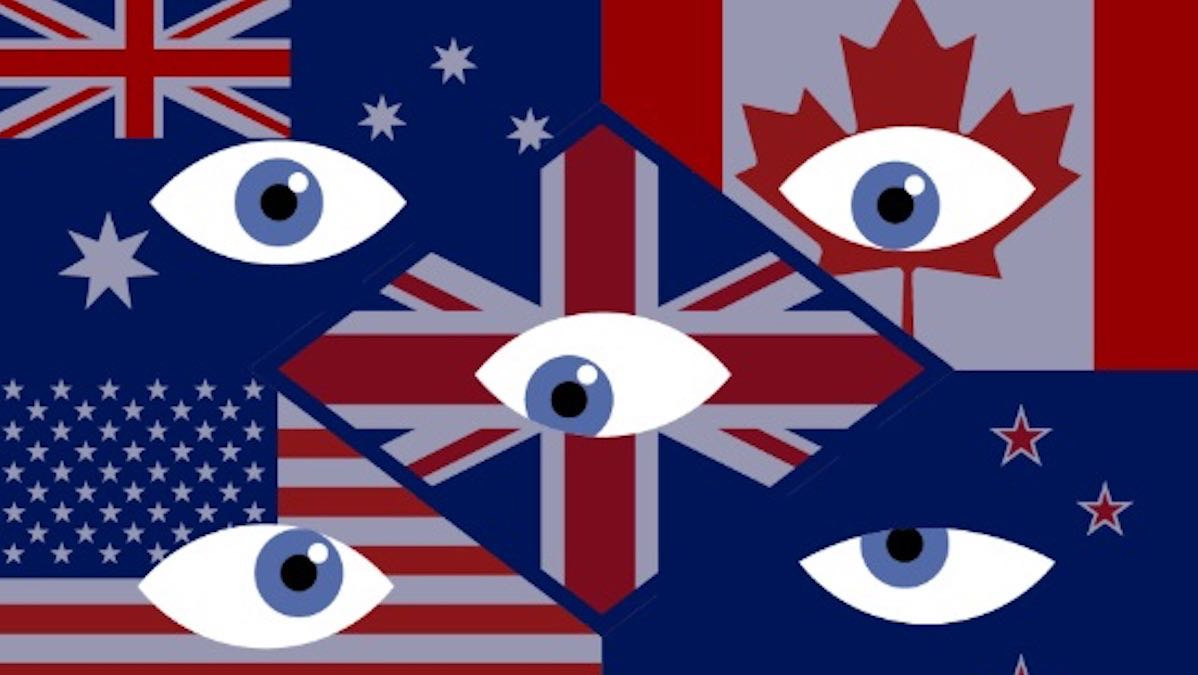
The United States, Canada, the United Kingdom, Australia, and New Zealand organize and share intelligence with each other through a framework called “Five Eyes”. This framework was initially created during the Second World War by the United States and the United Kingdom. Canada joined the UKUSA Agreement in 1948, bringing the Royal Canadian Mounted Police and the Communications Branch of the National Research Council (predecessor to today’s Communications Security Establishment, CSE) into the intelligence sharing framework.
Those intelligence ties were made with three crucial assumptions. The first was that the shared heritage of the United States and former British Empire would enable them to work together on even matters of the utmost secrecy. Another was that the democratic systems of government of our countries would bind us together in common interest. The third was that the Soviet Union, and its ideology centered around global communist revolution, was our primary adversary.
Those assumptions were all well-founded in the 1940s and continued to be into the 1980s. However, they came apart in the 1990s and 2000s. The collapse of the Soviet Union removed the shared adversary, and left only scattered bands of Third World terrorists militantly opposing the West. The imposition of Canada’s 1982 Constitution and the resultant shift in political power away from elected officials changed the conception of democracy. Generational turnover, the rise of multiculturalism, television, and secularization slowly eroded the Anglo-American assumptions so crucial in preserving relations between the Western Allies. The security ties which we had developed with Canada transformed from assets into liabilities.
Those liabilities became particularly noticeable following the Global War on Terror. The War on Terror was a windfall for the intelligence services and security forces across the West. It was no exception for the Canadian Security Intelligence Service, CSIS. It rose from its post-Cold War nadir of about 2,000 employees in the 1990s to over 3,200 employees - well above its late Cold War level of 2,700 employees. Much as in the United States, the War on Terror and resulting persecution of Muslims became awkward for the political class and judiciary as they derived such a large part of their legitimacy from their advocacy for civil rights and multiculturalism.
At the same time, the promotion structures of CSIS and the RCMP strongly incentivized a turn inwards. Those who spoke languages such as Urdu, Arabic, and Pashto were rare in CSIS and the RCMP but favored in the most critical investigations. Naturally their colleagues who desired promotions wanted for the critical investigations to be of people and groups who spoke their own languages: English and French. They gained their opportunity in the Trudeau years.
Justin Trudeau rose to power in 2015 with the Liberal Party’s electoral win that year. He is, like the 1982 Constitution, a child of the former Prime Minister Pierre Trudeau (1968-1979, 1980-1984). True to his family, he embraced a vision of Canada as a unitary post-national state, defined by its values and multiplicity of its communities. That contrasted with the older understanding of Canada as a country inhabited by two nations, the English-Canadians and the Quebecois, whose provinces worked together for common interest while preserving their own local traditions.
Trudeau’s vision had already been manifested by the 1982 Constitution, in particular by Section 27. Section 27, and later the 1988 Multiculturalism Act require that the government, business, and civil society actively promote multiculturalism. That goes far beyond the requirements of laws in the United States, which only require non-discrimination.
The results of those policies had two main detrimental effects on the security of the United States. The first was that they bestowed sovereignty upon the judiciary as the interpreter and guardian of a set of expansive entitlements, thereby superseding the traditional democratic belief in popular sovereignty and thereby coming into conflict with the democratic-republican ideology which defines the United States. The second was the development of the “Court Party” – government funded non-governmental organizations (NGOs) which worked with the bureaucracy and judiciary to shape state policy through political appointments and strategic litigation rather than legislation. Those NGOs ranged from the fairly benign such as the Women’s Legal Education and Action Fund, a feminist group, to the sinister, such as the Tamil Tigers-linked Canadian Tamil Congress.
The ideological conflict between the post-1982 Canada and the United States first came to public attention during the Second Iraq War in the mid-2000s. The Canadian government, true to its highly legalistic worldview, refused to enter the war despite the United States’ request as it did not have the blessing of the United Nations. While that worldview dissipated somewhat during the Conservative Party government of Stephen Harper, it returned with a vengeance under Justin Trudeau.
While the Court Party had been involved in the United States’ civil society since the first Trudeau, it only took an increased interest in the Canadian military and intelligence services after the election of Donald Trump in 2016. A 2017 anti-discrimination lawsuit filed by several anti-Trump and pro-Trudeau Muslims in CSIS1 enabled Trudeau to expand the Court Party’s control over CSIS by expanding employment equity in the service. Similarly, a number of harassment, discrimination, and sexual abuse claims against the RCMP allowed for Trudeau to install a new leader in the RCMP. That leader, Brenda Lucki, ensured that federal policing prioritized ideological compliance with political directives, particularly in regards to arrest disparities among Amerindians and women’s advocacy as well as employment equity.
Employment equity strictly understood pushes for the racial composition of employees to be similar to that of the general population. In practice, it requires that large organizations such as CSIS or the RCMP and the military utilize personnel or human resources departments to find people to act as community representatives – whether they be women, from an ethnic community, LGBT, etc. Those community representatives are expected to act in their community’s interest. In the adversarial context of the common law system, they naturally take the maximalist positions.
This prevents the Canadian government from identifying or mitigating subversive efforts within its own system at even very basic levels. Just this May, Gary Anandasangaree was appointed to head Canada’s Public Safety Ministry. He began his career as a federally elected politician from a heavily Tamil part of Toronto, and was known to have worked with at least three Tamil Tigers. At the Public Safety Ministry, he oversees the Border Services, the Royal Canadian Mounted Police, and CSIS among other agencies – many of which have access to information provided by the United States through the Five Eyes intelligence sharing frameworks.
Such officials have become the norm rather than the exception in Canadian politics. Former Defense Minister Harjit Sajjan utilized Canada’s military resources to evacuate non-citizen Sikhs from Afghanistan during the Kabul Evacuation, leaving 1,250 Canadian citizens to the mercy of the Taliban. Canada Border Service Agency superintendent Sandeep Singh Sandhu was closely tied with Pakistani intelligence as well as militant Khalistani separatists, and involved in an October 2020 assassination. Paul Chiang, an MP from Markham, called for bounty hunters to deliver his political opponent, wanted by the Chinese Communist Party, to China.
Canadian intelligence has also struggled with traditional spies. The director-general of the RCMP’s National Intelligence Coordination Centre, Cameron Ortis, expanded Canada’s use of Five Eyes intelligence, typically provided by the United States, in RCMP investigations. It was revealed in Ortis’ 2023 trial that his efforts to expand the use of that intelligence had been nefarious. He had been leaking information on investigations into Hezbollah and Iranian’s global proxy network as early as 2012.
Such conduct is not uncommon in Canada’s security forces and intelligence services. US Homeland Security officials have complained for almost a decade that their Canadian counterparts in CBSA leak information on smuggling operations to the cartels and triads. CBSA management refuses to fire or relocate even agents who are known to be corrupt or compromised. Under Trudeau the Younger, the focus of CBSA, CSIS, CSE, FINTRAC, and the RCMP shifted away from genuine criminals and towards communities which lack protection in Canada’s multicultural framework. Non-criminal Americans, Swedes, Frenchmen, and Israelis supportive of legal right-wing parties in their own countries have been targeted by the Canadian intelligence services. Canada’s very loose definition of terrorism2 has been used to designate non-criminal supporters of President Trump as terrorists, enabling their harassment by sympathetic members of non-Canadian security forces who would otherwise struggle to find probable cause for relevant investigations. Even Canadian citizens who merely provide legal services for rightists, such as Eva Chipiuk, have faced issues such as debanking likely driven by FINTRAC.
The prominence, access, and power of people such as Gary Anandasangaree in Canada makes our extensive security ties liabilities rather than assets. That Canada’s employment equity policies encourage them to promote personnel from their own communities in the intelligence services exacerbates the problem. The problem is further compounded by Canada’s change in identity following the 1982 Constitution. It ceased to be a country of two nations, and became a country of scattered communities who defining features are a handful of judicially defined values and a contrast against the United States. This guarantees that even ordinary Canadians such as former Deputy Prime Minister Chrystia Freeland, RCMP leader Brenda Lucki, and former RCMP National Intelligence Coordination Centre Director-General Cameron Ortis act against our interests. It would be wise of us to expel Canada from Five Eyes as well as all other intelligence sharing agreements.
Preserving Canada’s position in Five Eyes ensures the continuation of at least three serious problems. The first is that it guarantees continued leaks of secret information. The value of the information disseminated as the result of those leaks exceeds that of the information transferred by the Canadian intelligence services to Five Eyes. The second is Canada’s intelligence’s work against the United States and our allies. A number of non-criminal Americans, Swedes, and Israelis involved in legal right wing parties have already been spied on by CSIS. CSIS effectively enables their domestic opponents to get around due process requirements through Five Eyes. The third is FINTRAC’s work in financial deplatforming. FINTRAC is at least involved in the recent sanctions on two Israeli officials, and has likely been involved in the financial deplatforming in both Canada and the United States.
Agent of Change by Huda Mukbil is an excellent primary source on this
Canada’s definition allows for tweets, Facebook posts, and books to be considered terrorism
How does employment equity “prevent the Canadian government from identifying subversive efforts within its own system at even very basic levels”?
I don’t know about CBSA allowing corrupt/suspect officers to just keep working in sensitive positions. Their reputation is to fire first and find evidence later if anything. At the higher levels I can see them protecting people. That Supt you mention was cleared and doesn’t appear to have any ties to any foreign country, and the source of the allegations was very dubious.
I still think Ortis is innocent.